
Your needs, this model
Does it fit your priorities?
Can this regional KG79 be treated as an ordinary US 120 V grinder?
No. The reviewed regional rating is 220–240 V. A similarly named US family version does not change the label on this unit or make a plug adapter a voltage conversion.
Explore this need in the finder →Does the actual manual support a container-based drip routine?
Yes. Its operating steps collect grounds in a removable container and its brewing guidance includes drip coffee. Use the cup selector as an approximate batch guide.
Explore this need in the finder →Is routine upper-burr access documented?
Yes. The regional booklet describes removing and refitting the upper wheel, with the grinder disconnected. Keep the burr dry and follow the exact locking directions.
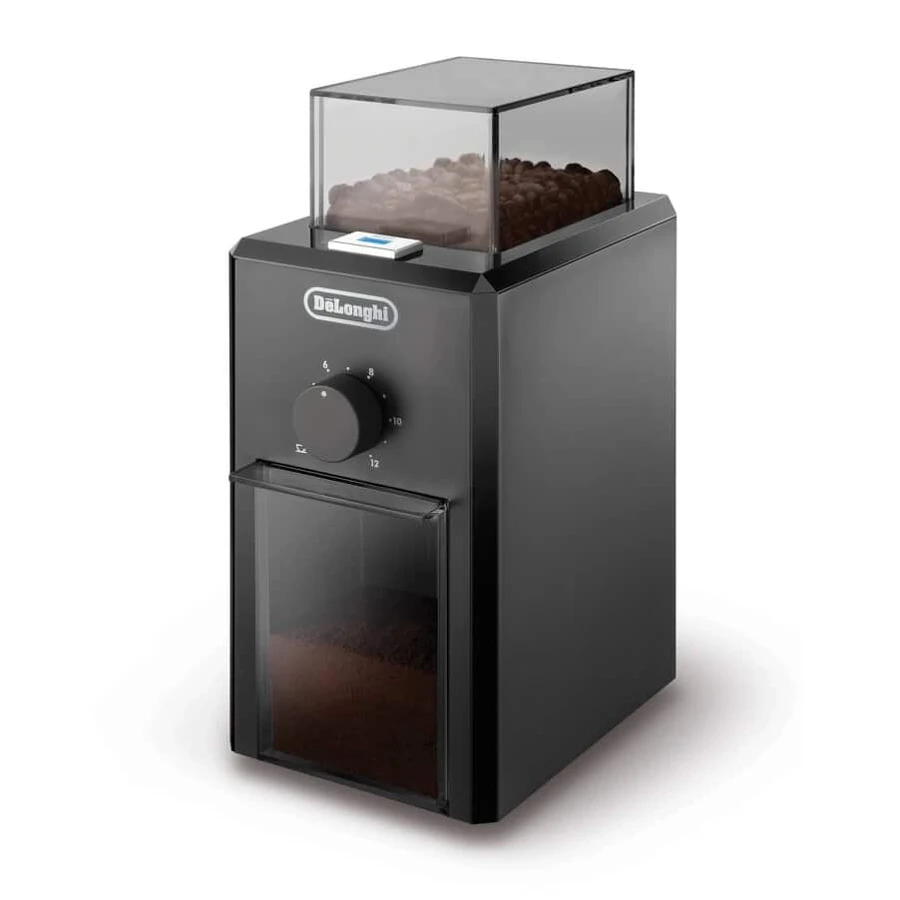
Explore this need in the finder →The KG79 is a real, separately named DeLonghi grinder rather than an interchangeable black title for any KG89. The regional reference assessed here uses a hopper, a cup selector and a grounds container. It can be relevant to a reader choosing that exact regional appliance or identifying one already owned, but its 220–240 V rating is a decisive boundary for a US kitchen.
The region is part of the product choice
The UK model reference identifies KG79 and SKU0177111075. Its electrical information and the applicable regional booklet describe 220–240 V operation. A US family manual exists elsewhere; it does not turn this unit into a 120 V version.
This is why a voltage essential should be checked before comparing small convenience features. A different plug shape or a travel adapter does not establish an approved electrical arrangement. If your goal is ordinary US mains use, choose an exactly documented compatible version instead of treating an import question as a cosmetic detail.
A conventional hopper-to-container routine
DeLonghi identifies flat burrs and a nominal 120 g bean hopper for this current regional reference. The operating booklet describes choosing cups and fineness, starting a cycle, and transferring the resulting grounds from the container. This is a practical arrangement when you brew into a separate filter and are comfortable handling a grounds bin.
The cup setting is a guide to quantity. It is not the same as selecting a dry-coffee mass on an integrated scale. If you follow a weighed recipe, measure the result separately and adjust your routine for your beans and brewer rather than assuming a universal grams-per-cup conversion.
Use the stated brew guidance carefully
The reviewed regional instructions discuss drip, moka and espresso settings. Those are manufacturer use recommendations, not proof of measured uniformity or successful calibration with every conventional espresso basket. Nor does an espresso setting establish a holder for your particular portafilter.
A reader making mainly filter coffee may place greater value on the batch selector and transfer routine than on a large adjustment count. An espresso owner may instead need finer evidence about basket type and control. The correct comparison begins with those needs; it should not assign a quality score from the number of marked positions.
Removable burr access has a clear procedure
The booklet gives an actual upper-wheel removal and reinstallation process. Disconnect power, use the specified selector and locking positions, and clean the grinding surfaces as directed. Being removable does not mean the burr can be soaked or put in a dishwasher.
This also affects where the appliance lives. Allow room to handle the container, reach the hopper and perform maintenance. A bare set of body dimensions would not establish that the grinder can be refilled and cleaned inside a tight recess, particularly when the dimension order is not clearly labelled in the extracted product table.
What to confirm before buying
The maker's page and shared regional manual do not agree on wattage. We do not combine those records into a single invented upgraded version. Use the actual unit's label for electrical service and confirm the matching operating edition.
Choose this KG79 reference for its documented regional hopper-and-bin design and upper-wheel access when that is the appliance you intend to use. If your essentials are US 120 V supply, integrated gram dosing, a supported espresso handle or a maker-approved single-dose routine, require those facts explicitly from a suitable alternative. A genuine product can be useful without being the correct electrical or functional match for every reader.
Key details at a glance
| Maker-supported espresso use | Yes |
|---|---|
| Maker-supported filter brewing | Yes |
| Grounds bin or dosing cup | Yes |
| Repeated-dose hopper use | Yes |
| User-removable upper burr | Yes |
| Nominal bean-hopper capacity | 120 g |
Use the exact model’s instructions for operating limits, supplied equipment and version differences.
Sources for this assessment
Find a grinder for your daily coffee.
Compare the brewing methods, loading routine and dose controls you actually need.